GrandTour
At ETH Zurich, alongside my studies, I worked as a Lab Assistant in Marco Hutter’s Robotic Systems Laboratory (RSL). I worked with Jonas Frey, Turcan Tuna and other great people on the GrandTour project, where we built a sensor box called Boxi that could be carried by an ANYmal quadruped robot, and then used Boxi to collect an unprecedented legged robotics dataset.
You can see the project in detail and find the dataset and related papers at the project website.
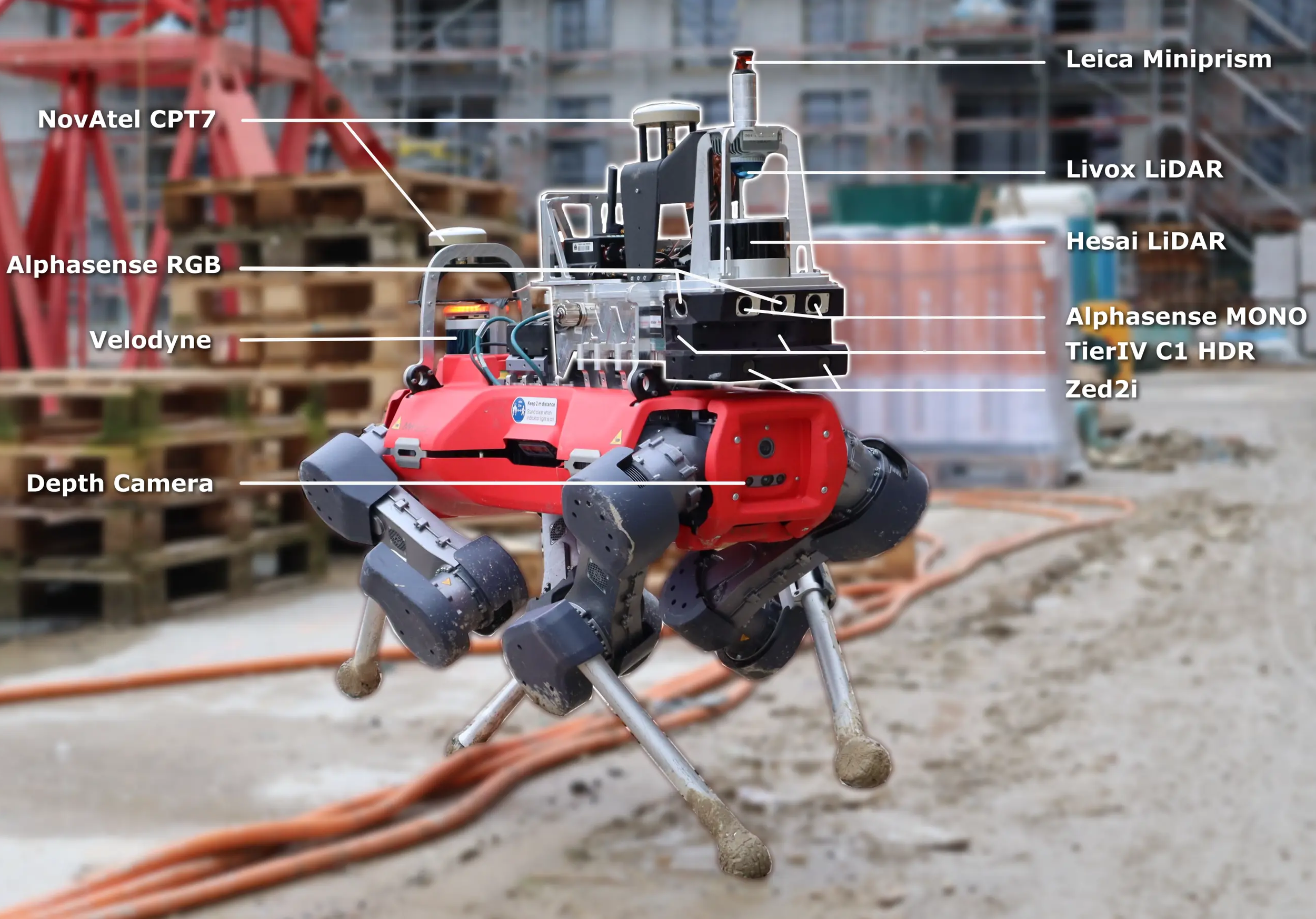
Boxi mounted on an ANYmal Quadruped Robot, sensors labeled.
I joined the project when the sensors had been selected and the chassis and assembly of compents had been designed, and my role was integration. We had 10 cameras, 2 lidars, 7 IMUs, GPS, a Leica optical positioning system, all talking to 3 computers and the ANYmal robot in a highly syncronized manner, so this wasn’t trivial.
Once the custom machined Boxi was assembeled, integrated, calibrated and tested, we then collected our dataset in a hugely varied set of locations across Switerland.
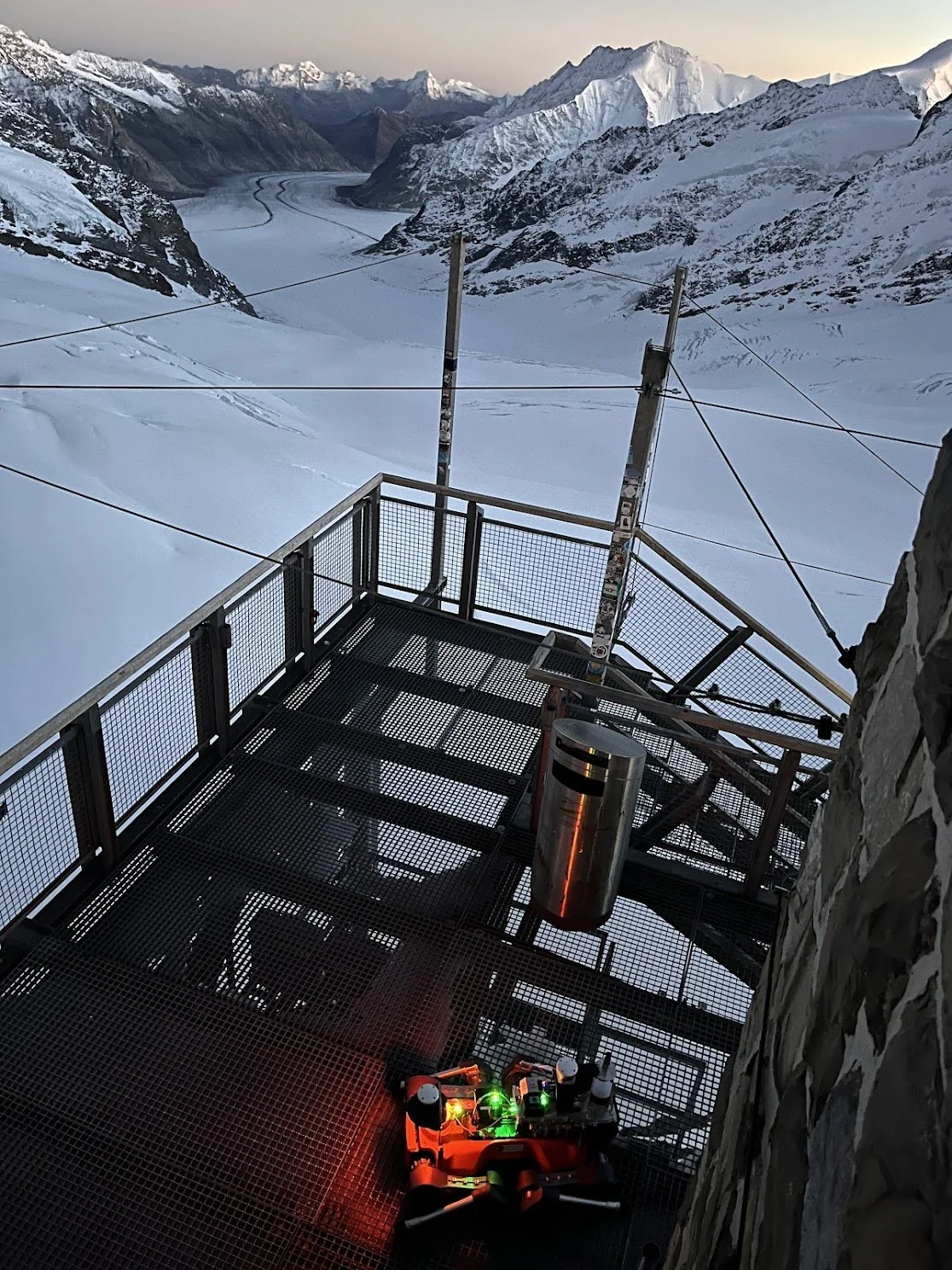
Collecting data on top of a glacier.
This was an incredible project to work on.
I learned an enormous amount about the practicalities of robotics — when computer science and software meet hardware, suddenly nothing is straightforward. Electromagnetic interference, networking protocols, time synchronization issues, overheating. All things you don’t have to bother with when you’re just dealing in software. But when machines need to interact with the world, your most valuable skills become the practical ones, and it is immensly rewarding to finally Get The Show On The Road.
I got comfortable emailing manufacturers, performing experiments — can we profile the lag between sending a command to expose the camera and the image data actually being recorded, so that we can accurately timestamp when the central pixels in the image are recorded? —, rewriting driver code to better suit what we needed, and cleaning and validating huge amounts of collected data.
The folks at RSL were a real highlight of this time, I was so impressed by how professionally the lab operated and the sheer volume of work they got done, all while remaining generous with their time, helpful and performing feats of science.